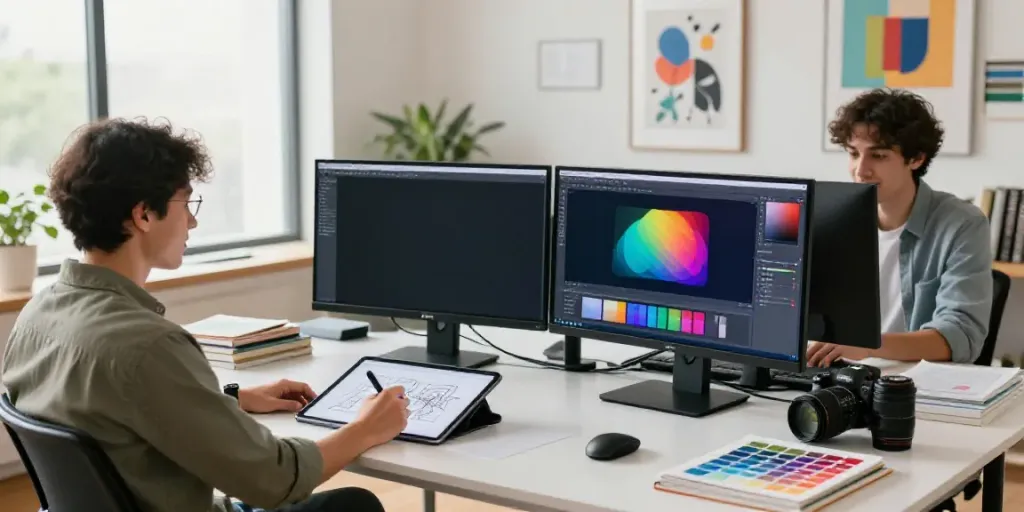
Understanding the Online AI Visual Content Generator
In the rapidly evolving digital landscape, the demand for visually compelling content has escalated. As brands strive to engage audiences effectively, tools that enhance visual storytelling have become invaluable. One such tool is the online AI visual content generator, which uses advanced algorithms to create stunning visuals from simple text prompts. These generators not only facilitate quick content creation but also democratize design, allowing users without formal training to produce professional-grade imagery.
What is an Online AI Visual Content Generator?
An online AI visual content generator is a software tool that leverages artificial intelligence to convert text-based input into visual content. This can range from images and infographics to videos and animations. By interpreting the user's descriptive text, these tools generate graphics that align with the provided concepts, making it easier for marketers, social media managers, and content creators to visualize their ideas.
Key Features and Capabilities
- User-Friendly Interface: Most generators are designed with intuitive interfaces, allowing users to navigate without prior design knowledge.
- Style and Format Options: Users can often select from various styles, formats, and templates to ensure the visuals meet their brand aesthetics.
- Customization: Many tools provide editing capabilities post-generation, enabling users to tweak elements like colors, fonts, and layouts.
- High-Quality Output: These generators can produce high-resolution images suitable for both digital and print use.
Comparing with Traditional Design Methods
Traditional design methods often require extensive training and experience, not to mention the time-consuming process of creating graphics from scratch. In contrast, online AI visual content generators significantly reduce the time and expertise needed to produce high-quality visuals. They allow users to focus on creativity rather than technical skills, democratizing design and making it accessible to a broader audience.
Benefits of Using AI for Visual Content Creation
Time Efficiency and Productivity Boost
One of the most significant advantages of AI-driven content generation is the time saved in the design process. What once took hours or even days—brainstorming, sketching, editing—can now be accomplished in minutes. This efficiency allows businesses and creators to produce more content in less time, ultimately leading to increased productivity.
Cost-Effectiveness for Businesses and Creators
Hiring professional designers or agencies can be prohibitively expensive for many small businesses and individual creators. Online AI visual content generators provide a cost-effective alternative, often requiring only a subscription fee or a one-time payment, which is significantly lower than traditional design services. This affordability helps businesses allocate resources to other critical areas.
Enhanced Creativity and Innovation
AI visual generators encourage creativity by providing users with fresh perspectives and unexpected results. The element of surprise can inspire creators to think outside the box, explore new themes, and incorporate innovative concepts into their work. This enhanced creativity can lead to more engaging content that captivates audiences.
Challenges and Limitations of AI Visual Generators
Quality Concerns and Output Variances
While AI has made significant strides, quality can be inconsistent across different generators. Users may find that the output varies based on the complexity of their input or the specific AI model utilized. This variability means that while some visuals may exceed expectations, others might fall short, requiring additional tweaking or entirely new attempts.
Understanding AI Limitations in Design
AI is limited by the data on which it has been trained. Complex design concepts, emotional nuances, and unique artistic styles can sometimes elude these algorithms. This limitation underscores the importance of human oversight in the design process, where creators must refine AI-generated content to align with their specific vision.
Ethical Implications of AI-Generated Art
The rise of AI in the creative space also brings ethical considerations. Questions surrounding copyright, ownership, and the definition of creativity itself arise when machines produce art. As AI-generated content becomes mainstream, society must address these ethical dilemmas to ensure fair practices within the creative community.
Real-World Applications and Use Cases
Content Creation for Marketing Strategies
Businesses leverage AI visual generators to create marketing materials quickly, from social media graphics to promotional videos. By generating visuals that complement their campaigns, companies can maintain a consistent brand image and engage their audience more effectively. Additionally, generated content can be easily tailored to different platforms, enhancing adaptability.
AI in E-Commerce and Product Visualization
In the realm of e-commerce, AI visual content generators are invaluable for creating product images, advertisements, and lifestyle shots that resonate with customers. By producing high-quality visuals that showcase products in engaging contexts, businesses can drive conversions and enhance customer experience.
Educational Uses of AI Visual Tools
Educators utilize AI tools to create engaging and informative visuals for presentations or learning materials. By transforming complex subjects into digestible graphics, teachers can enhance understanding and retention in students of all ages. This application extends to e-learning platforms, where such visuals can significantly enrich content delivery.
Future Trends in AI Visual Content Generation
Advancements in AI Technology for 2026
The future of AI visual content generation holds promise as advancements in machine learning and neural networks continue. By 2026, we can expect even more sophisticated algorithms capable of understanding context and nuance, leading to higher-quality outputs that align closely with user intentions.
Predictions for User Interaction and Experience
As AI generators evolve, the user interface and interactive experience will also improve. Tools may incorporate more intuitive features, allowing users to communicate their creative vision more effectively. Expect to see functionalities like voice input or real-time feedback systems that enhance the collaborative aspect of design.
Integrating AI with Other Creative Tools
The integration of AI visual content generators with other creative tools will become more seamless. We may see collaborative platforms that combine text, video, and audio content creation, enabling users to produce multi-dimensional projects with ease.
What are the costs associated with online AI visual content generators?
Costs can vary widely, ranging from free limited-use options to premium subscriptions that offer advanced features. Users need to evaluate their specific needs to choose the right tool that balances functionality and budget effectively.
How do online AI visual content generators impact design quality?
While many generators deliver impressive results, the impact on design quality can depend on various factors, including input specificity and individual user skills in editing the final result.
Can businesses rely on AI generators for all their content needs?
While AI visual content generators can streamline many processes, businesses should not solely rely on them for all content needs. Combining AI tools with human creativity often yields the best results, balancing efficiency with creativity.
What skills are needed to effectively use an AI visual content generator?
Users should have a basic understanding of design principles and be comfortable using digital tools. Familiarity with branding and marketing concepts can also enhance the effectiveness of visuals generated.
How will AI visual content generators evolve in the upcoming years?
As technology progresses, we can expect AI visual content generators to grow more sophisticated, enabling users to generate increasingly complex and high-quality visuals with ease, fundamentally changing how we think about content creation.